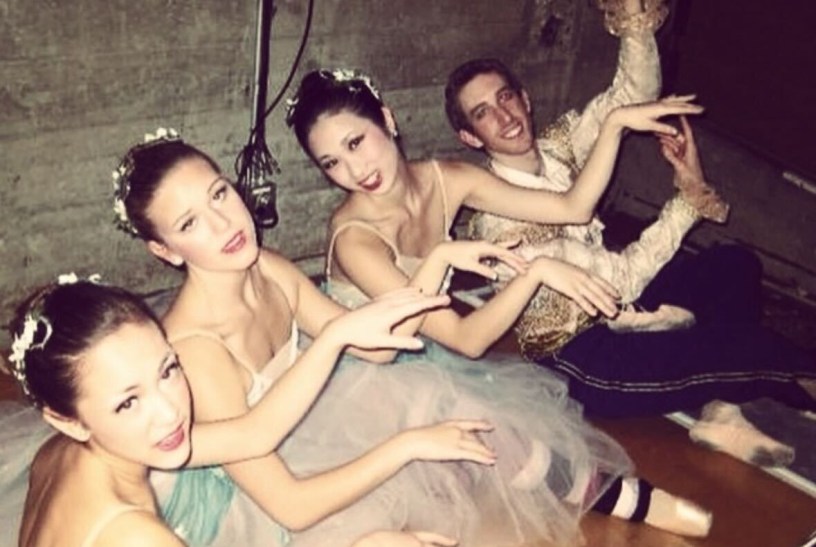
The holiday season is here and with it, performances of Pyotr Ilyich Tchaikovsky’s classical ballet The Nutcracker are in full swing around the world. The Classic W recently sat down with retired ballerina Mackenzie Martin to talk about her ballet roots; memorable moments as a professional ballerina; why she put away the pointe shoes; and miscellany. (The interview has been lightly edited.)
TCW: How did you get started dancing? Did anyone in particular have a big influence on your dancing career?
MM: I think I started like a lot of little girls. My mom put me in dance when I was two or three. Obviously, I was very movement-oriented – she saw me always moving and dancing around the house, so she knew I could be great at dance. It’s actually funny, because they tell me that I initially refused to go into the class and take a class with other children. So I started off very bougie with private lessons.
TCW: Did you start with ballet or were there other styles in the mix?
MM: It was always ballet.
TCW: What is it about ballet that drew you to it?
MM: The discipline. It’s very black and white, and it’s all about the technique – you’re either doing the step right or you’re not.
No matter the genre, everything in dance is subjective but I feel like ballet is a little less so. When you’re training, there’s not really a lot of room for individuality. That’s something the ballet world has gotten slack for, but it also helped me, because it was very clear what I had to do to succeed.
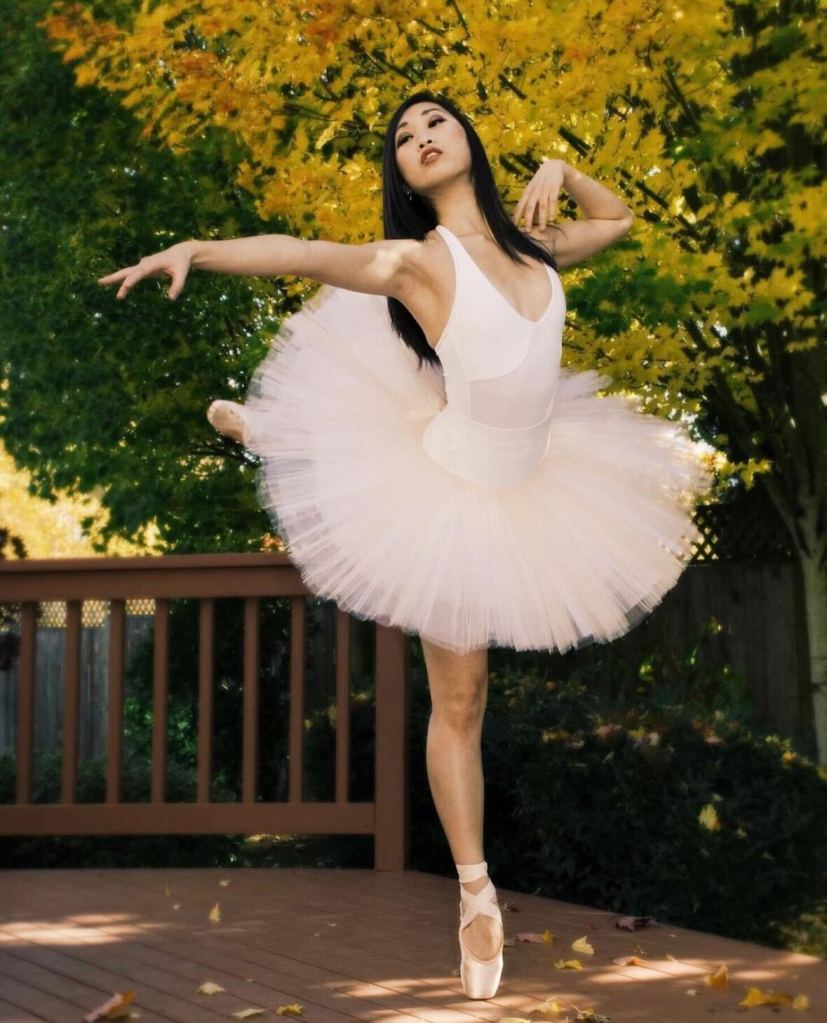
TCW: I know you danced with numerous ballet companies throughout the US from 18 to 24 years old. Can you tell me about that? What companies did you perform with? Where did you perform?
MM: I joined the pre-professional program at the Miami City Ballet when I was 18, right after graduating from the North Carolina School of the Arts where I was also in the ballet program. It was like ballet boarding school – I moved away my senior year of high school to go there.
My two years at the Miami City Ballet are where I got my first taste of “professional” ballet life, and it was an interesting experience. The entire company takes class every morning and then everyone goes into rehearsals for the rest of the day. And ballet companies can be very hierarchical – so when you first start, you’re at the bottom of the barrel and you’re learning every role. It was like a traditional 9-to-5 job, but instead of sitting at a desk, I was dancing.
From there, I got a job at Oregon Ballet Theatre and danced there for a few more years.
TCW: What does it take to climb the hierarchy within ballet companies?
MM: A lot of moving up the ranks is dependent on how long you’ve been at a company as well as your experience level coming in. It’s different from a traditional company though – a lot of ballet companies have moved away from ranking dancers with titles. And some people never move on from the corps de ballet (the most junior level in a company). But I also shouldn’t say “move on” because some people have very fulfilling 20-year careers in the corps.
If you’re principal in a company, you’re like Michael Jordan. If you’ve heard of Misty Copeland, she was a principal dancer at American Ballet Theater, although she really didn’t get that designation until the end of her career dancing for them – that’s how hard it is.
TCW: Have you met any famous ballet dancers over the years?
MM: Yeah, I met a lot of them. Patricia Barker, who was one of the most famous principal ballet dancers for Pacific Northwest Ballet. Some of my teachers were very famous “trinas” in their day.
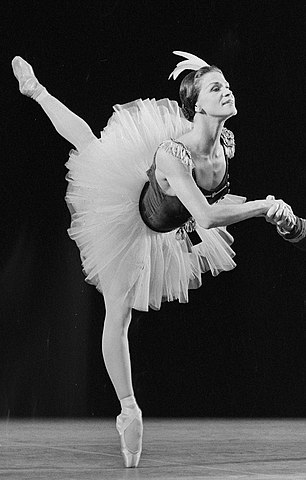
One of my most memorable coaches was Melissa Hayden. She was a muse of George Balanchine, who is one of the most well-known choreographers in the ballet world and had a big impact on ballet. He had six or seven muses over the years; if you read any history book about American choreography or any kind of ballet choreographers, you’ll see their and George’s names.
TCW: Have you seen the movie The Black Swan? If so, what are your thoughts on it? Is it at all relatable for you?
MM: I did see it. It’s obviously overly dramatized, but I think there’s truth within the story, particularly the psychological elements of it. The pressure, the mental toll ballet can take on dancers – a lot of that is very real. But of course, the movie is very dramatic and made for the screen.
TCW: Did you ever do famous shows like The Nutcracker or Swan Lake, or were your shows mostly based on original choreography?
MM: I did both. Almost every company does The Nutcracker in the holiday season. When I was at Oregon Ballet Theatre, we did around 30 shows of The Nutcracker, and if you’re in the New York City Ballet, you could do 100 shows. For some companies, holiday performances of The Nutcracker are the year’s biggest money maker (besides grants, donors and sponsors).
Since I grew up doing The Nutcracker so many times, there was a time when I couldn’t stand listening to any of the music that comes on in Macy’s or other department stores around the holidays. It was all from that show and forever burned into my ears.
I just wanted to shop in peace.
TCW: What was your favorite role to perform in The Nutcracker? Did you have different roles throughout the performances?
MM: I did pretty much every single role as either a student or a professional. By the time I was in high school, I got to do the creme de la creme – the sugar plum fairy. That role was stressful. It was a cool experience — and certainly not something everybody can say they’ve done — but stressful.
I was also Clara, which was really challenging.
I had the most fun with the Arabian because it was easier for me. Each role has a bit of a different skill set per se, especially depending on who the choreographer is, and Arabian is more legs and flexibility-focused, both of which were aspects I was good at. It was something that came easily to me which made it a non-stressful role.
TCW: Overall, what is your favorite moment or memory from being a dancer?
MM: Being on stage is the most fulfilling part. You dance from 9 to 6 every day so you can be on the stage performing in front of a full theater. Performances are my best memories.
TCW: What was your pre-show routine like? Were you ever nervous or excited?
MM: It would depend on the role I was doing or the situation. I recall being nervous at certain times, but for the most part, I wasn’t one of those ballerinas who would be puking behind the wings. I was usually very excited to perform and get on stage.
TCW: Can you think of a moment when you were most excited?
MM: I was always excited when my family was there. Because I was all over the country, they weren’t able to see me perform every weekend. I have very vivid memories of specific shows when they were there and those were the most special shows to me.
TCW: What made you decide to move away from dancing?
MM: I think it had a lot to do with being physically and mentally burned out. It’s a grind day after day.
I also didn’t want to fall back on a full-time teaching career, which is what a lot of dancers do when they’re done. I had a great run dancing, but I left at a young enough age to start another full-time job and build a career in business comms.
TCW: I know you currently teach dance at a competition studio too – what’s that like? Do you get a similar rush seeing your students perform?
MM: In a sense, but it’s also very different. I have a teacher’s perspective now rather than a dancer’s perspective, so I love seeing them get better. I do kind of miss dancing when I see my students up on stage.
TCW: Is there anything you’d tell a young person that is interested in getting involved in dance?
MM: It’s harder and a lot more work than you probably think it is. You’ve got to have thick skin.
TCW: Okay, it’s time for our rapid fire round. What’s your favorite TV show?
MM: Schitt’s Creek.
TCW: You’re stranded on a desert island for the rest of your life. What’s the one item you take with you?
MM: My phone.
TCW: Dinner with three people dead or alive. Who?
MM: My mom, my maternal grandma and my maternal grandpa.
TCW: How many baseball hats do you own?
MM: A lot, like a lot. I wouldn’t know, there are stacks.
TCW: Favorite Jimmy?
MM: I think I like Fallon.
TCW: How do you eat your eggs?
MM: All different ways. There isn’t one specific way that I consider my favorite.
TCW: What’s your favorite season?
MM: Fall.
TCW: Besides where you live now, what’s your favorite place in the world?
MM: New York City.
TCW: What’s your favorite means of transit?
MM: I love to drive.
 The Classic W