1. The state’s name may come from one of your favorite spices
No-one’s really sure what the name Oregon means, but one theory is that the state is named for the oregano plant that grows in the region. That might be pleasing to your palate, but other theories associate the moniker with the Spanish word for “ear,” likely referring to the sound made by the rush of the Columbia River, which is the state’s northern boundary. Or maybe “Oregon” comes from an engraver’s error associated with the Wisconsin River, which is thousands of miles to the east (this is one of the prevailing theories). Absent a time machine, we’ll never know.
2. It had the first English-speaking settlement on the western side of the Rocky Mountains
If you’re not from the region, you’ve probably never heard of Astoria, Oregon, but it figures prominently in the history of the western half of the United States. Located in the northwest corner of Oregon, where the Columbia River meets the Pacific Ocean, the city was the first English-speaking settlement west of the Rockies in what is now the U.S. It was also the seasonal outpost for Lewis and Clark in the winter of 1805-1806, and maintained prominence for decades. In fact, in 1847, the first two U.S. post offices in the Pacific region were established concurrently — one in Astoria and one in Oregon City.
3. Oregon is the country’s leading producer of lumber…
A state with abundant natural resources, Oregon is filled with lush forests, which comprise close to half of its acreage. When the railroads effectively shrank the country and simplified transport in the late 19th century, Oregon became a powerhouse in the production of lumber — which gave Portland its “Stumptown” nickname — and it remains the country’s top lumber producer in the 21st century.
4. ….and hazelnuts.
If you like hazelnuts, you’ve almost certainly enjoyed some from Oregon, as 99% of the country’s hazelnuts are grown in the state.
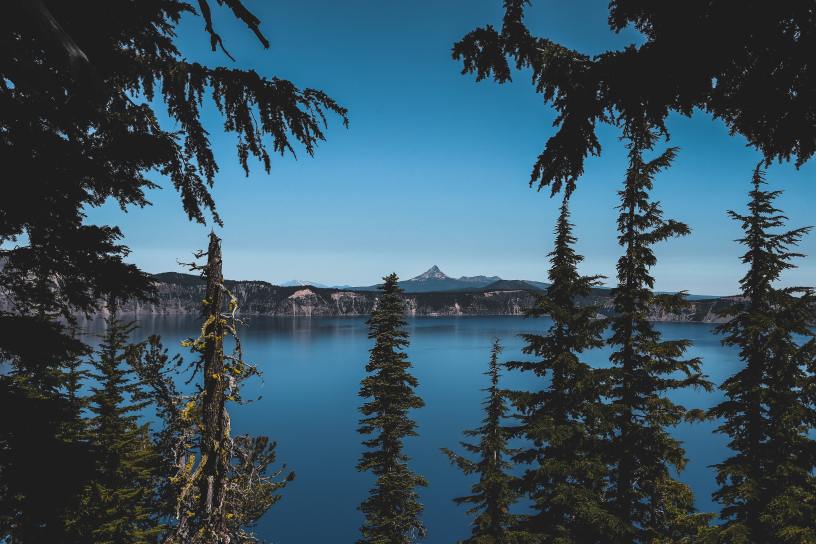
5. It has the deepest lake in the United States
Located in the southern half of Oregon is Crater Lake. In terms of area, it’s about 20 square miles — a respectable lake, but nothing to write home about. In terms of depth, it has no peers in the United States and few in the world. The lake apparently sits in the crater left by the eruption of Mount Mazama thousands of years ago. Today, you can visit the lake as the centerpiece of Crater Lake National Park.
6. There were six war casualties in the Second World War in Oregon
If you didn’t know this, it will blow your mind. In World War II, Oregon was the only of the 48 U.S. states (at that time) to suffer war casualties on its soil. In 1944-1945, the Japanese launched thousands of hydrogen balloons — think hot air balloons — equipped with bombs that were intended to detonate in the United States. Hundreds of balloons made it over, but didn’t explode immediately. But in May 1945, a church group was on an outing when they stumbled across a strange balloon lying on the ground. They, seemingly, kicked or prodded it, and the bomb exploded with devastating consequences.
 The Classic W