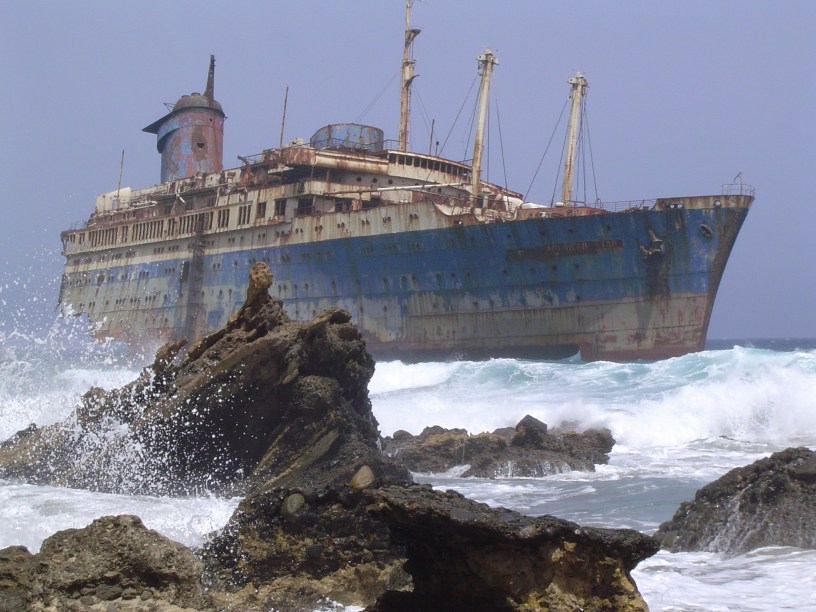
END OF SHIPWRECKS
SCIENTIST’S NEW METHOD TO PREVENT SEA DISASTERS.
Daily Forecasts on Steamers by Wire-less Data Plan of German Guest of Secretary of Agriculture
New York — Shipwrecks at sea are unnecessary, according to Dr. Peter Polis, a German meteorologist, who arrived here the other day as a representative of the German government to consult with the American department of agriculture.
The German visitor, who was accompanied by his wife, has inaugurated a system of interchangeable wireless weather reports among trans-Atlantic ships whereby an official weather map is to be issues aboard every cross-sea liner every day, giving weather forecasts up to 36 hours, by means of which ships can be warned to prepare for any kind of storm. In the case of smaller vessels coming over the Grand Banks, the forecast can be sent fare enough ahead to permit them to take refuge at St. Johns or Halifax.
Dr. Polis, who is director of the Ocken Meteorological Observatory, was in communication every day during the trip across the ocean with both continents by wireless through ships that were passing between his vessel and either shore.
In this way he got the latest information as to the weather and was able to give particulars to approaching craft. At all hours, day and night, he had a radius of 1,000 kilometers covered by the Kaiserin wireless in sending weather bulletings.
Dr. Polis will go to Washington to try to induce the weather bureau to use numerals instead of words in its wireless code system. All nations except America use numerals, the objection to the use of code words, particularly those ending in “ing,” being that they are confusing and more difficult to decipher.
During his voyage, the German weather expert, by kites flown from the deck, took features of the heavens daily, but on the third day the kite got away and was traveling Europeward at the rate of about 30 miles an hour when last seen.
The last direct shore-to-ship message which the German forecaster received was at a distance of about 3,000 kilometers.
Twice a day the temperature, barometer, force of wind and direction fo the air were taken by Dr. Polis and recorded in a map which he displayed on the bulletin board of the ship.
His weather warnings were sent to the Arabic, Lusitania, La Savoie and several other vessels going and coming.
“Dangers of collision in fogs, the unheralded approach of a storm and consequent danger to life and property,” said Dr. Polis, “will be eliminated on the ocean when my plan of daily weather reports is perfected.”
(Originally published in The Citizen, American Fork, Utah, September 26, 1908) Photo by Wikipedian Wollex; shared under Creative Commons 3.0 license.
 The Classic W
