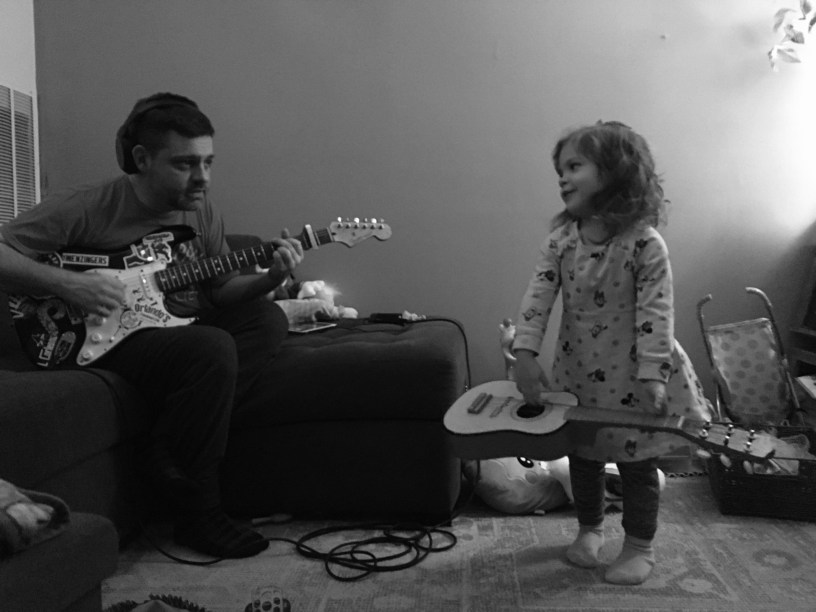
Recently formed rock group Turnpike Gates released its critically acclaimed debut EP last year, and opened for the Flaming Lips over the summer at New Jersey’s legendary Stone Pony. The Classic W recently sat down with Turnpike Gates frontman Ryan Smith to talk about music, life and miscellany. (The interview has been lightly edited.)
TCW: Can you tell us why you decided to create Turnpike Gates and what the name means?
RS: I didn’t consciously think about creating it. It just happened. I was writing out of necessity, because of things that happened in my life — that’s typical for any writer — and the songs just started to come.
The name was something I liked because it reflected a life spent traversing the New Jersey Turnpike between Jersey City, where I live, and Philadelphia, where I was raised. It’s the name of an amazing song by a band called Lifetime from down in New Brunswick that I’ve loved since I was a kid. I’ve always appreciated that song, and the name itself kind of reflected my life.
I also have a whole bunch of people from Philly, who still live in Philly, in my band. Nate, who plays violin on a couple of tracks on the EP, is a Jersey City guy who has since relocated to Vermont. When I was doing the album, I was working with Nate and living my life in Jersey City, so it kind of made sense to make the name of our group reflect the connection between Philly and my life here in Jersey.

TCW: Can you tell me about the new EP? How would you characterize the music on it?
RS: It’s been characterized a few different ways by different bloggers. Jim Testa from NJ.com who has a great site of his own — Jersey Beat — referred to it as music with a “Celtic” influence, which I guess it is, in hindsight. I’ve definitely been around Celtic music, especially Celtic rock, and punk rock, which is another huge influence of mine. I think that comes through on the EP.
Also, what they call heartland rock, which is the rock and roll that has grown out of America — the music that has reflected the way we’ve lived over many years. Over the past few decades — with Springsteen being the godfather in NJ — a number of artists have fallen into this rock genre.
“Americana” is a newer term for stuff that’s more folk-influenced. I think the EP is a mix of all of those things.
TCW: What is your favorite track? And what track is resonating most with people you talk to?
RS: My favorite one to play is “I Give”, the fourth track. It’s fun and very personal to me. But it actually seems to resonate with others the least, which is fine.
The first song, The Lie, is probably closest to my heart.
The second track, Hiding in Plain Sight, is the one that people really seem to connect with, for whatever reasons. It’s upbeat, and people seem to really like it.
TCW: I know you’re very passionate about music. Can you talk about how you see lyrics and music meshing? When you’re writing a song, would you characterize one or the other as more important?
RS: It’s funny, I think they’re equally important. When I was younger, I put more focus on the words. Ironically, as I’ve gotten older and focused more on making sure the music is good and unique, my lyrics have gotten better.
Maybe someday, I’ll see the lyrics as secondary, but I’ve always been a big lyric person. Tom Waits is a huge influence and musical hero of mine, and songwriters who focus on words have always been my favorites.
TCW: You released your album last year. When did you write all the songs?
RS: A couple of the songs on the EP were in the works for a few years. The Lie was written a handful of years before the record came out. I wrote a couple much closer to the release of the record. But I was writing stuff throughout, so there are songs that I began writing awhile back — prior to ones that were released on the record — that I’m still working on, and will probably end up on the next record.

TCW: I wanted to ask you about some of the lyrics. “I’ve been drinking again, getting high as William Penn.” I assume that’s a reference to the statue of William Penn being the highest point in Philadelphia…
RS: It’s no longer the highest point in the city, but it was for many years.
TCW: Any commentary on that…I’m not from Philly — what building is that on?
RS: City Hall. The William Penn statue graces the top of City Hall. That lyric, which people seem to connect with, was hugely influenced by a lyric by the band fun. On the last record they came out with, he talks about friends in the bathroom getting high as the Empire State. Not sure if I would say I was paying homage to that, but that was definitely where I got the idea from.
TCW: “I had this dream we were in France, on Hugo’s grave we shared a dance.” Anything on that?
RS: The song itself was influenced by the life led by my cousin, who has passed. He was a pretty cerebral dude and an avid reader who also loved to have fun. Nothing against Hugo, but I was probably trying to find a writer from France who fit into the song.
TCW: There’s obviously a lot of emotion and a lot of you in your songs. How much of it is fictionalized versus how much of it is an accurate portrayal?
RS: I think that the more you find yourself as a writer — which I have, at what I think is a late age — the more you start to be able to write lyrics that show empathy. You’re able to empathize in general with the people around you. I think there’s a lot in the album that comes from personal experience. But there’s a whole lot of it that I feel on behalf of other people, or things that other people are experiencing that I can appreciate because I’ve experienced something similar, if not the same thing. So, it’s a little bit of both.
TCW: Who would you say is your greatest musical inspiration?
RS: That’s a tough one. Earlier, I mentioned Waits, who’s a huge influence, but I don’t know if I have one specific influence.
There’s people like Daniel Johnston, who passed away a few months ago, who persevered through so many things. He’s not someone necessarily whose record I’ll listen to once a month — while there are 100 artists who I might listen to on a weekly or daily basis. But I’m most inspired by artists who were able to persevere, whether it’s personal stuff or professionally; maybe their music wasn’t accepted by who they wanted to be accepted by. Those are the people who give me inspiration.
TCW: What’s next for Turnpike Gates? You mentioned songs in the works for the next album. I know you’ve done one show recently. What can we expect to see coming down the pike, if you’ll pardon the pun?
RS: I definitely have a couple more shows coming up soon, both in Philly and in Jersey City/New York City. We’re just going to do a couple more over the next few months before releasing another record in 2020.
I’m in the process of demoing a bunch of the songs — I’m almost finished with that process. Soon, I’ll begin recording them in earnest, and in 2020 I’ll have another record coming out. I think that at that point, I’ll be at a point in my life where I can do more live stuff.
I did the Stone Pony this summer, which was an incredible experience on a bunch of different levels. I’m doing a couple more shows in the fall, but I only have so much time. I have a full-time job and a family that are my priorities. And as much as I love to do the music stuff, being able to be tight enough to play the Stone Pony, or anywhere, really…when you play live, you want it to be super tight and come off really strong. To be able to do that, you need to put in the time to practice. I only have so much of that.
Hopefully next year, after the next record, I’ll be able to dedicate more time to that and play some more shows.
TCW: Dinner with three people, dead or alive, in music or beyond. Who are they?
RS: Start with music. McCartney would be number one. How could you not want to have dinner with a Beatle? Not just is he a Beatle, but he’s experienced so much. He has a song on his last record called “Dinner at Sinatra’s” or something (editor: “Frank Sinatra’s Party”). He would be an amazing person to have at a dinner.
Second person is Edmund Bacon, who was a long-time city planner in Philadelphia. Going back to the William Penn statue, he was the city planner at a time when cities around the country were putting up skyscrapers. And he did not love the style of the times, so he put out this unwritten law that you couldn’t build anything higher than the William Penn statue. It’s funny, because that’s why Philadelphia now has one of the most beautiful skylines, because the buildings were built more recently. He was incredibly important in helping to build out the Philadelphia that I grew up in, and which people love today. There was actually a plan that just came out about constructing a park to connect Old City and the Delaware River, which is probably something he would have loved to see. And he’s also Kevin Bacon’s father.
The last person I would like to have is my grandfather on my mother’s side, who I knew and loved when I was a child. He passed when I was younger, but to not only be around him and get to have dinner with him as an adult, but to learn more about my family and his experience, that would really be something.
TCW: How many baseball hats do you own?
RS: A couple dozen right now, I just threw out a bunch. It could be much more than that, if I would just hold on to them forever, but I don’t have the room to store them.
TCW: You’re stranded on a desert island for the rest of your life. What’s the one book you take with you?
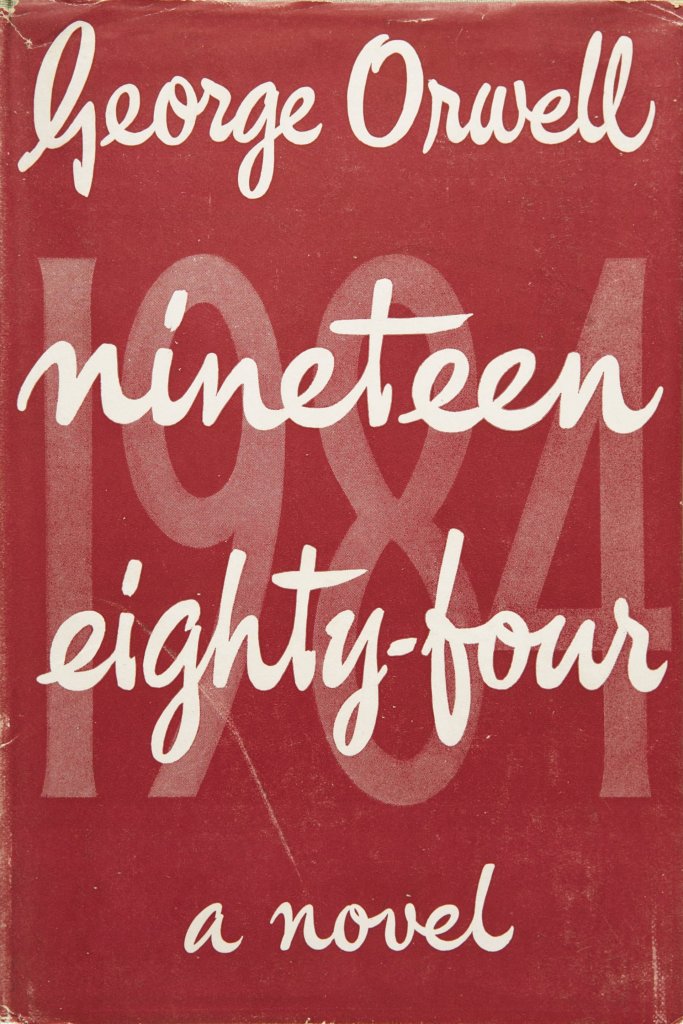
RS: 1984 is the book that I come back to over and over again, it never gets old to me. So, from the standpoint of what book have I read the most and would I be able to read as many times as possible without going crazy, that seems like the one.
That said, if I were stranded on a desert island, it might be better to have something a little bit more inspirational. I’d have to think on that. Maybe something like The Prophet.
TCW: Which of the seven dwarfs describes how you feel after a few drinks?
RS: Nowadays, Sleepy. Is that a dwarf?
TCW: If you lived 300 years ago, what would you do professionally?
RS: Make music. Spend my days protecting my family from, I don’t know, seems like there was some really bad stuff going on 300 years ago. I was thinking about this the other day, and talking to my wife about all the existential threats we live with today — nuclear war, guns everywhere here in the US — and I started thinking that 300 years ago, most people were living under monarchies and had to fight for their lives in so many different other ways.
My profession would probably be trying to protect my family from dying before the age of 15.
TCW: What would you say is your ideal means of transit? Plane, train, bus car…
RS: Train, for sure. I mean, a good comfortable train is the best way to go. I really don’t like flying, I don’t enjoy being in the car. Walking is good, but if I had to get into a moving vehicle, it’s train for sure.
TCW: Rapid fire round. Greatest New Jersey musician?
RS: Bruce.
TCW: Best book you ever read?
RS: The Sun Also Rises.
TCW: Favorite Jimmy, any spelling?
RS: The ones on ice cream.
TCW: Favorite Jimmy person, any spelling?
RS: Jimmy Kimmel.
TCW: I was thinking Rollins or Hendrix.

CC BY-SA 3.0)
RS: Can I revise that to Rollins?
TCW: Most underrated musical instrument?
RS: Dulcimer.
TCW: Who’s your favorite dead president?
RS: You gotta go Lincoln.
TCW: Can you rank in order the following musical genres: Classical, Gospel, Country.
RS: Classical best, gospel second best, country.
TCW: Can you rank New York, New Jersey and Philadelphia?
RS: That’s impossible. They’re all equally amazing in their own ways.
TCW: How do you eat your eggs?
RS: Soft-boiled, if I can.
TCW: Favorite season?
RS: Fall.
TCW: Favorite seasoning?
RS: I don’t do much seasoning, but like most people from the Mid-Atlantic, I’m into Old Bay.
 The Classic W
.jpg)
Comments are closed.