Reference materials such as dictionaries, encyclopedias and internet resources can be helpful in at least three ways. First, they provide people with information about topics they know nothing about. Second, they disabuse people of “misinformation” that they may have absorbed or assumed. Finally, they affirm individuals’ existing assumptions about one matter or another, buttressing the conviction with which they believe in the given topic.
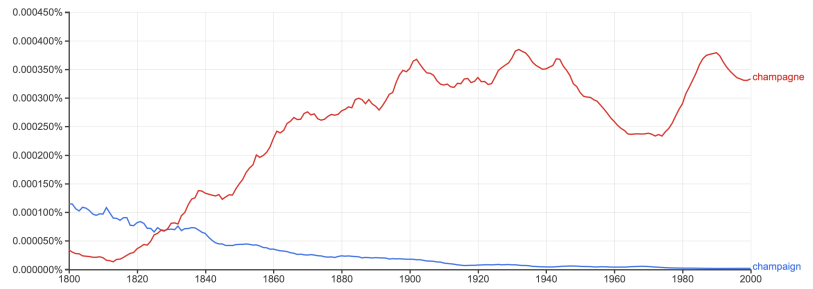
The below graph, pulled from Google Books’ Ngram Viewer will likely be helpful in several of these ways.

The chart compares the comparative frequency with which two separate words have been used over time in published works (only the published works included within Google Books): “champaign” and “champagne”. The most obvious takeaway is likely something you could have guessed: The word “champagne” is used much more frequently than the word “champaign.”
But, as the left side of the graph shows, this trend only holds true for 190 years. Prior to 1829, “champaign” was the more commonly published word, and for years, “champaign” was much more common.
Most modern English speakers are probably unfamiliar with the word “champaign,” but in the early 19th century, it had several uses.
- Not surprisingly, the word was as an alternate spelling of “champagne.” For example, the book A Diary in America: With Remarks on its Institutions includes the phrase “I was drinking champaign at a supper” (page 5).
- According to an English language dictionary published in 1832, the word also meant “a flat open country.”
- “Champaign” was also used at times as the spelling for the Champagne region of France.
- While the more well-known Champaign, Illinois was not founded until the second half of the 19th century, Champaign County, Ohio was founded in 1805.
It should be stressed that the above graph shows specifically the prevalence of these two terms with books on Google Books. Other data sources may provide other insights — especially if you’re willing to dig.
Google has another tool called “Google Trends” which allows you to analyze trends relating to terms entered into Google Search.
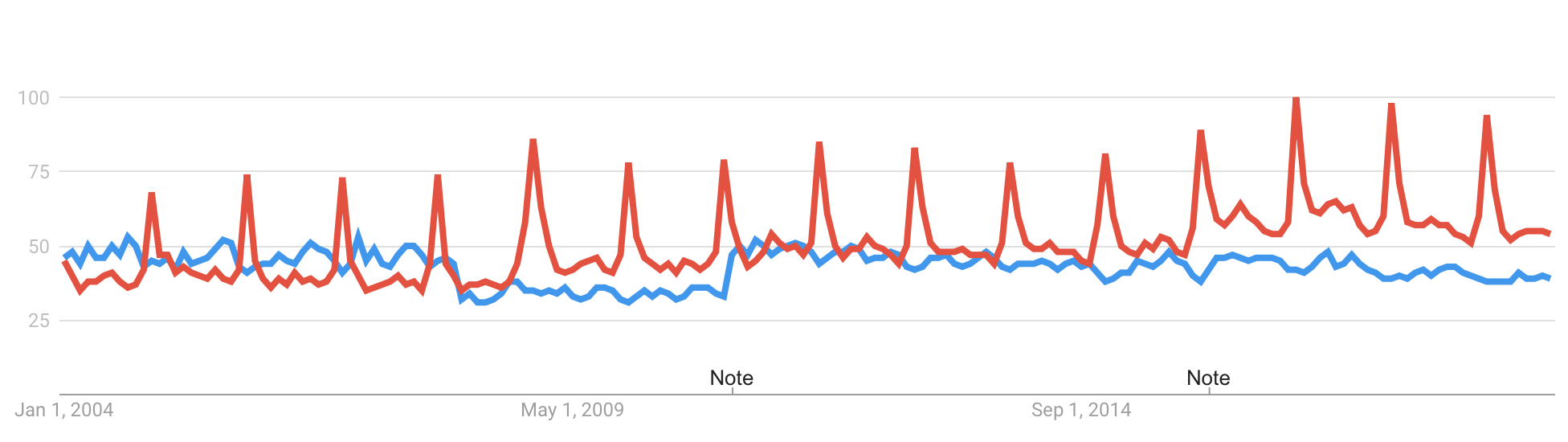
This graph shows “champaign” vs “champagne” results over the past 15 years, and yields some interesting results. Notably, while the term “champagne” has regularly outpaced “champaign”, the former’s greatest successes are in the month of December. In fact, “champaign” has beaten “champagne” at least once in all 11 other months of the year; that said, “champaign” has been in something of a dry stretch for about five years.
Finally, we can drill down into the Google Trends geographically:
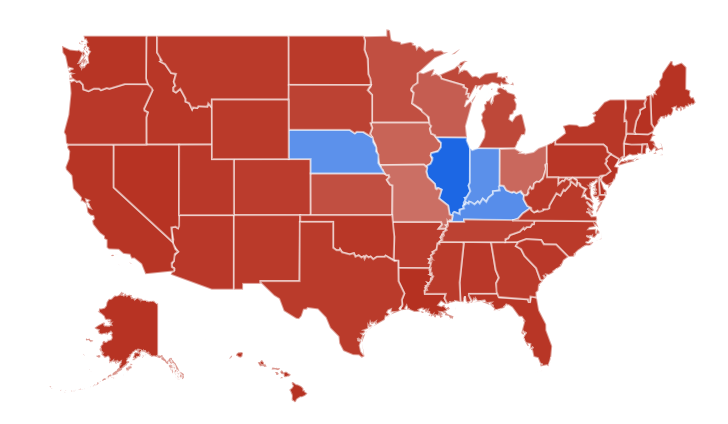
While 46 states reflect the overall national preference for “champagne” searches, Nebraska, Indiana and Kentucky are exceptions, while Illinois is a true outlier, with a 91-percent preference for “champaign.”
Notably, Ohio — which has a county called Champaign — does not buck the national trend, although “champagne”‘s margin of victory in the state is rather narrow. “Champaign” did edge out its competitor in Ohio in 2011.
 The Classic W